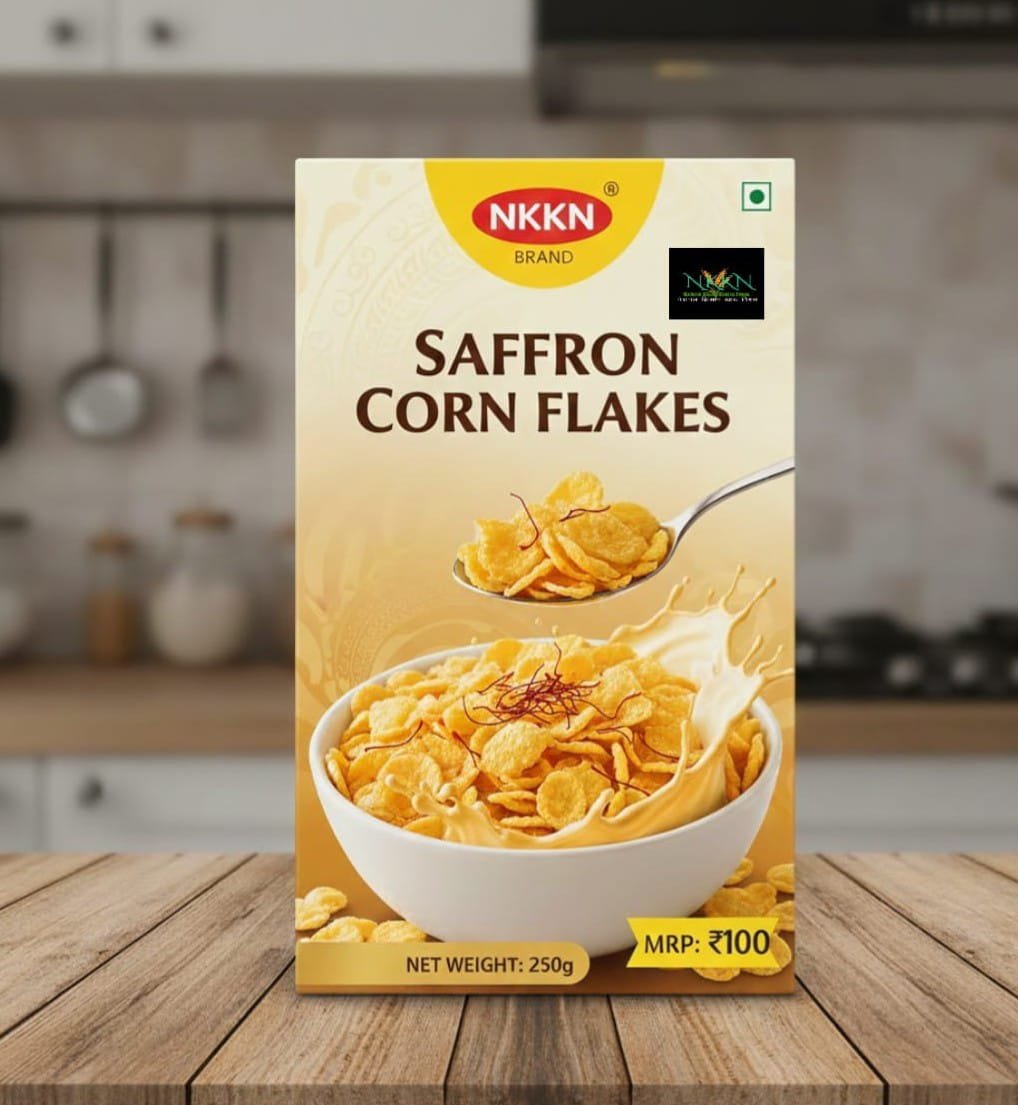
Breakfast cereals have evolved significantly over the past century—moving from plain grains and porridges to highly processed, fortified, and flavor‑innovative ready‑to‑eat products. Among the most iconic of these is corn flakes, a cereal originally developed in the United States in the late 19th century, which has since become a staple breakfast choice around the world. In India and many other regions, corn flakes are enjoyed with milk, fruits, nuts, or even creative toppings. While classic corn flakes are light and mild in flavor, new variants featuring spices and unique ingredients—such as saffron—are emerging to meet evolving consumer tastes and premium positioning.
One such variation making waves in certain markets is saffron‑infused corn flakes. Although specific product details on NKKN Brand Saffron Corn Flakes are scarce, the concept of blending exotic saffron with corn flakes sits at the intersection of tradition and innovation—bringing together the simplicity of breakfast cereal with the luxurious aroma and flavor of saffron.
1. The Appeal of Corn Flakes in India and Beyond
Corn flakes have been one of the most popular breakfast cereals globally. Made from toasted flakes of corn, they are usually served with milk, yogurt, or fruits for a quick, convenient, and relatively nutritious start to the day. They are loved for several reasons:
- Convenience: Ready‑to‑eat straight from the box—just add milk.
- Versatility: Can be paired with cold or warm milk, yogurt, fresh fruits, honey, or nuts.
- Mild Flavor: Easily adaptable to sweet or savory profiles based on toppings.
- Wide Appeal: Enjoyed by children, adults, and seniors alike.
In India, the adoption of corn flakes as a breakfast item has grown rapidly with urban lifestyles favoring quick meals. Regional brands and retailers offer locally made corn flakes at competitive prices, introducing variants with subtle taste differences (from plain to nutty or sweet profiles).
2. Saffron: The Spice of Luxury and Health
Saffron—derived from the flower Crocus sativus—is one of the world’s most expensive and aromatic spices. Known for its distinctive golden‑yellow hue, intense aroma, and complex flavor, saffron has been prized for centuries in culinary and medicinal traditions. Its inclusion in breakfasts or sweet dishes carries cultural resonance in regions like India, Iran, Spain, and parts of the Middle East.
Adding saffron to everyday food serves multiple purposes:
- Gourmet Sensation: Saffron imparts a rich, luxurious taste that enhances otherwise simple dishes.
- Visual Appeal: The vivid coloring agents in saffron (mainly crocin) give foods a golden tint that signals indulgence.
- Cultural and Emotional Connection: In South Asian cuisine, saffron evokes festivity and tradition, often used in biryanis, desserts like kheer, and even in saffron milk.
- Perceived Health Benefits: While scientific research varies, saffron is popularly associated with appetite regulation, mood enhancement, and antioxidant qualities.
Incorporating saffron into a breakfast cereal thus elevates a mundane morning meal into something reminiscent of traditional flavors and premium experiences.
3. What “Saffron Corn Flakes” Aim to Deliver
A product like NKKN Brand Saffron Corn Flakes—conceptually similar to other saffron–nut corn flakes offerings—would aim to differentiate itself from ordinary corn flakes by combining crunchy cereal with the aromatic notes of saffron. The conceptual advantages might include:
Enhanced Flavor Profile
Instead of the neutral, slightly sweet taste of standard corn flakes, saffron infusion provides:
- A subtle floral aroma,
- Gentle earthy sweetness,
- A visually attractive golden color in the flakes.
This makes the cereal not just functional but also pleasurable to the senses.
Premium Positioning
Saffron is a premium spice. Blending it into corn flakes signals that this is not an everyday cereal but a premium breakfast option, potentially appealing to:
- Health‑conscious consumers seeking novelty,
- Urban buyers willing to pay more for gourmet twists,
- Households looking for a special breakfast for guests or children.
Cultural Connection
In countries where saffron holds cultural value—such as India, Pakistan, Iran, and parts of the Middle East—such cereal can resonate with traditional tastes even in a modern breakfast context.
4. Ingredients and Nutritional Considerations
Typical corn flakes are made from maize (corn), sugar, salt, and sometimes fortified vitamins and minerals. A saffron variant would add saffron threads or saffron extract, and may include other complementary ingredients such as pistachios or almonds. (For example, saffron–pistachio corn flakes ).
Potential Ingredients
- Corn grits – the base of the cereal,
- Saffron – for flavor and color,
- Sugar or natural sweeteners – for palatability,
- Nuts (pistachios/almonds) – optional for texture and nutrition,
- Fortified vitamins/minerals – common in breakfast cereals.
Nutrition Snapshot
Corn flakes are typically low in fat, low in cholesterol, and rich in simple carbohydrates. When paired with milk or yogurt, the overall nutritional profile improves. The addition of saffron does not drastically alter macronutrients but enhances flavor. Adding nuts introduces healthy fats and protein.
5. How to Enjoy Saffron Corn Flakes
The beauty of this cereal lies in its versatility:
Classic Bowl
- Add chilled or warm milk.
- Top with a drizzle of honey and a few saffron threads for added aroma.
With Fruits
- Pair with sliced bananas, strawberries, or mangoes to balance saffron’s aromatic intensity.
Yogurt Parfait
- Layer corn flakes with Greek yogurt, saffron milk, and dried fruits for a protein‑rich breakfast.
Snack Mix
- Use the flakes as a base for a crunchy mix with nuts and dried fruits for teatime snacking.
6. Comparisons with Traditional Corn Flakes
While traditional corn flakes are beloved for their simplicity, products with exotic ingredients like saffron offer:
- Taste Innovation – breaking the monotony of plain cereal breakfasts,
- Cultural Fusion – blending global breakfast habits with local flavors,
- Premium Appeal – catering to consumers seeking gourmet experiences.
However, consumers should consider that:
- Price point may be higher than regular cereals due to the cost of saffron,
- Flavor might be an acquired taste for those unfamiliar with saffron,
- Nutrition should be balanced with milk and fresh fruit to improve dietary value.
7. Market Trends and Consumer Behavior
India’s breakfast cereal market has been expanding, with both international giants like and local brands offering a range of products. While classic versions dominate household pantries, innovative variants such as multigrain, honey‑nut, and fruit‑infused cereals are gaining ground. Premium flavors and health‑oriented variants reflect a shift toward breakfast as not just nourishment but an experience.
While specific data on NKKN Brand Saffron Corn Flakes is unavailable through typical online retail and search channels at the moment, similar concepts have shown that niche, flavored cereals can appeal particularly to:
- Millennials seeking novel breakfast options,
- Families introducing children to varied tastes,
- Gift markets during festive seasons where saffron holds symbolic value.
Conclusion
Saffron corn flakes—as embodied by the idea of NKKN Brand Saffron Corn Flakes—represent a compelling blend of tradition and innovation. By infusing a classic ready‑to‑eat cereal with one of the world’s most prized spices, such products cater to a niche segment that values sensory delight, cultural resonance, and premium experiences.
While verified product information on the NKKN brand specifically isn’t readily available online, the broader concept illustrates how breakfast cereals continue to adapt and evolve in response to consumer tastes and lifestyle trends.